Subjectief betekenis in het engels
Veel vertaalde voorbeeldzinnen bevatten "subjectief" – Nederlands-Engels woordenboek en zoekmachine voor een miljard Nederlandse vertalingen. Vertalingen in context van "subjectief" in Nederlands-Engels van Reverso Context: Het is subjectief en verandert constant. Subjectief betekenis in het engels Find all translations of subjectief in English like subjective, subjective idealism and many others. To support our work, we invite you to accept cookies or to subscribe. You have chosen not to accept cookies when visiting our site.

Subjective meaning SUBJECTIVE definition: 1. influenced by or based on personal beliefs or feelings, rather than based on facts: 2. Learn more.


Subjective meaning
Learn the difference between subjective and objective, two words that are often used to describe opinions, views, or observations. Subjective means based on personal perspective or preferences, while objective means unbiased and based on facts or reality. The meaning of SUBJECTIVE is of, relating to, or constituting a subject. How to use subjective in a sentence.Biased definition
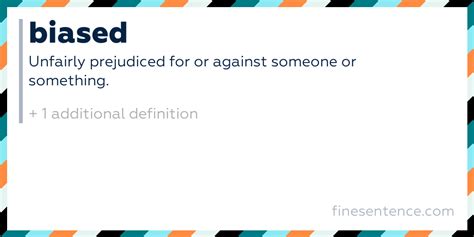
Biased means exhibiting or characterized by bias, which is an unreasoned judgment or prejudice. Learn the difference between bias and biased, see synonyms and antonyms, and read example sentences from various sources. Biased means showing an unreasonable like or dislike for someone or something based on personal opinions. Learn how to use this adjective in different contexts, synonyms, antonyms, and translations. Biased definition Learn the meaning of bias as a noun, verb, adjective, and adverb, with synonyms, examples, and phrases. Find out the difference between biased and bias, and how to use them correctly.Personal opinion
Learn how to state, make, explain, agree, disagree and conclude your opinions in English with 65 useful phrases. Find out how to ask for and listen to others' opinions with examples and tips. Learn how to express your personal viewpoint in different situations with these 20 phrases. From casual to formal, from assertive to tentative, find the right way to share your opinion with examples.- Personal opinion Learn the difference between explicit and implicit expressions of opinion and how to use them effectively in essays and term papers. Find out which phrases and structures are preferred in certain fields and contexts and how to avoid confusion and vagueness.
Point of view
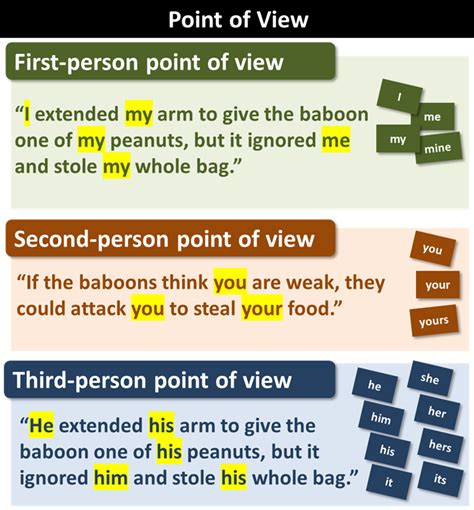
Learn what point of view is and how it affects the way a story is told. Explore the three main modes of point of view (first, second, and third person) and their variations and functions. Learn the difference between first, second and third person narration in fiction and how they affect the reader's perspective and experience. See examples of each point of view and how they are used in classic and contemporary literature.- Point of view Learn what point of view (POV) is and how to use it in your stories. Explore the four main POVs: first, second, third, and fourth, with strengths, weaknesses, and examples from literature.